Why a thorough location analysis is essential today
Whether it’s project development, an investment decision, or a market valuation – nearly every real estate project begins with one key question: Is the location attractive in the long term?
The answer to this question cannot be based on gut feeling. It is based on a wide variety of data that provides insight into a location’s current situation and future development. Population trends, purchasing power, rental and purchase prices, infrastructure, project developments, and comparable transactions are just a few examples.
However, the real challenge often lies not in determining what data is needed, but rather in finding that data and figuring out how to meaningfully synthesize it.
In this article, we’ll show you what information is essential for a professional location analysis, what data sources are available to you, and how you can significantly reduce the amount of research required.
What data is included in a real estate location analysis?
Depending on the specific question being addressed, different metrics may be relevant for a location analysis. In practice, however, the following data components are often included in a thorough analysis:
Sociodemographic data
This data forms the foundation for understanding a location.
It includes, for example:
- Population
- Population trends
- Age structure
- Household sizes
- Purchasing power
- Income
- Employment structure
These metrics help assess how a location might develop in the future and which target groups live there or will live there in the future.
Real estate market data
Information on the local real estate market is equally important.
This includes, among other things:
- Asking rents
- Purchase prices
- Price trends
- Vacancy rates
- Comparable transactions
They provide insights into the market potential as well as the opportunities and risks of an investment.
Infrastructure and accessibility
A location’s attractiveness is significantly influenced by its accessibility.
Key factors include, for example:
- Public transportation connections
- Road traffic
- Highways
- Train stations
- Airports
- Schools
- Preschools
- Local amenities
These factors play a particularly crucial role in the residential and retail sectors.
Competition and environment
A professional location analysis also examines the immediate market environment.
This includes, for example:
- Existing competitors
- Retail location
- Project development
- Business location
- Redensification
This allows opportunities and potential competitive situations to be identified early on.
Where can you find this data?
Generally speaking, there are various ways to research data for a real estate location analysis.
1. Public data sources
Many key metrics are provided by public institutions. These include, for example, federal and state statistical offices, municipal statistical agencies, and open geodata portals.
Advantages:
- often free of charge
- high data quality
- official sources
Disadvantages:
- Varying levels of recency
- Different formats
- Scattered information
- Significant research effort required
2. Specialized data providers
There are specialized providers for many types of market information.
For example:
- Purchasing power
- Real estate prices
- Mobility data
- Point-of-interest data
- Market transactions
The advantage often lies in the high level of data depth.
3. GIS and analysis platforms
Many companies rely on GIS (Geographic Information System) solutions to perform spatial analyses.
These offer extensive capabilities for visualization and analysis.
For many users, however, they are complex, require specialized knowledge, and often assume that the necessary data is already available and prepared.
The biggest challenge: Consolidating data
In practice, the real work often lies not in the analysis itself, but in data collection.
Typical challenges include:
- different data sources
- varying update cycles
- different file formats
- lack of comparability
- manual processing
- data visualization (e.g., maps)
- Consolidation into reports
This effort can be considerable, especially when dealing with multiple locations or short project timelines.
What a modern location Analysis should achieve
A modern location analysis should offer significantly more than just individual metrics.
Ideally, it should enable:
- the consolidation of relevant location data
- the combination of market and structural data
- the mapping of key information
- analysis of catchment areas
- review of comparable transactions
- incorporation of current project developments
This transforms a collection of data into a sound basis for decision-making.
One platform instead of many individual solutions: IZ Research
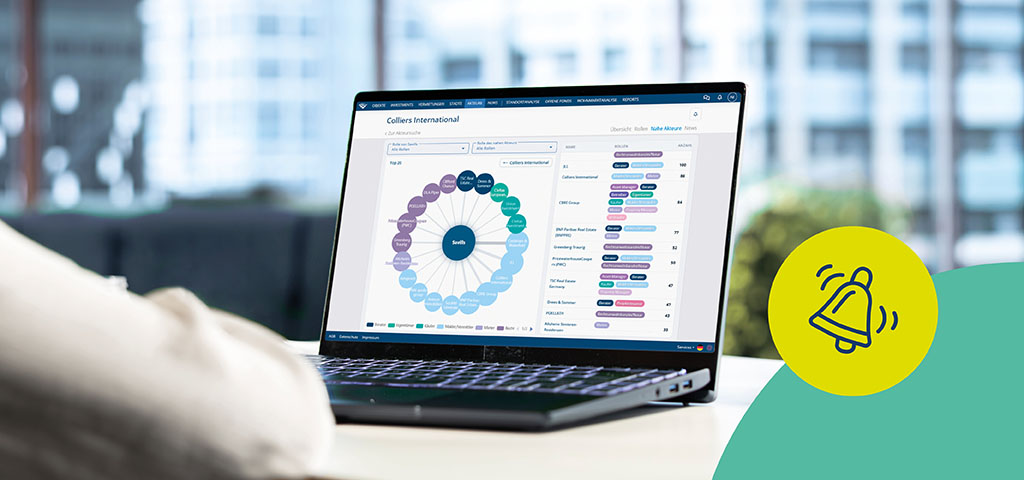
Anyone who regularly conducts location analyses knows how time-consuming it is to compile information from various sources. With IZ Research, many of these steps can be consolidated into a single, centralized platform. Users gain access to a wealth of data relevant to real estate and location analyses – including market and structural data, sociodemographic metrics, comparable transactions, project developments, catchment areas, and cartographic representations.
Instead of consolidating data from various portals, analyses can be created within a single application and exported for further processing or presentation. This saves time and creates a unified data foundation for project development, investments, market analyses, or location evaluations.
Conclusion
A thorough real estate location analysis is based on a wide variety of data. The biggest challenge often lies in consolidating this information from different sources and keeping it up to date. While public data portals and specialized providers supply important individual pieces of information, integrated data platforms such as IZ Research significantly streamline the analysis process. Relevant metrics are aggregated, correlations are visualized, and data-driven decisions are supported. Those who regularly evaluate locations or analyze real estate projects therefore benefit greatly from this solution, which combines data research, analysis, and reporting into a single workflow.
How do I get access to IZ Research?
How can I get a trial account for IZ Research?
You can request a trial account at www.iz-research.com/en. To do so, please enter your contact information here, and we will get in touch with you.
How can I use IZ Research as a student?
Are you a student in your final year or working on a thesis? Then register here for free for the duration of your thesis or project (maximum 2 x 4 weeks). You’ll receive access to all data.